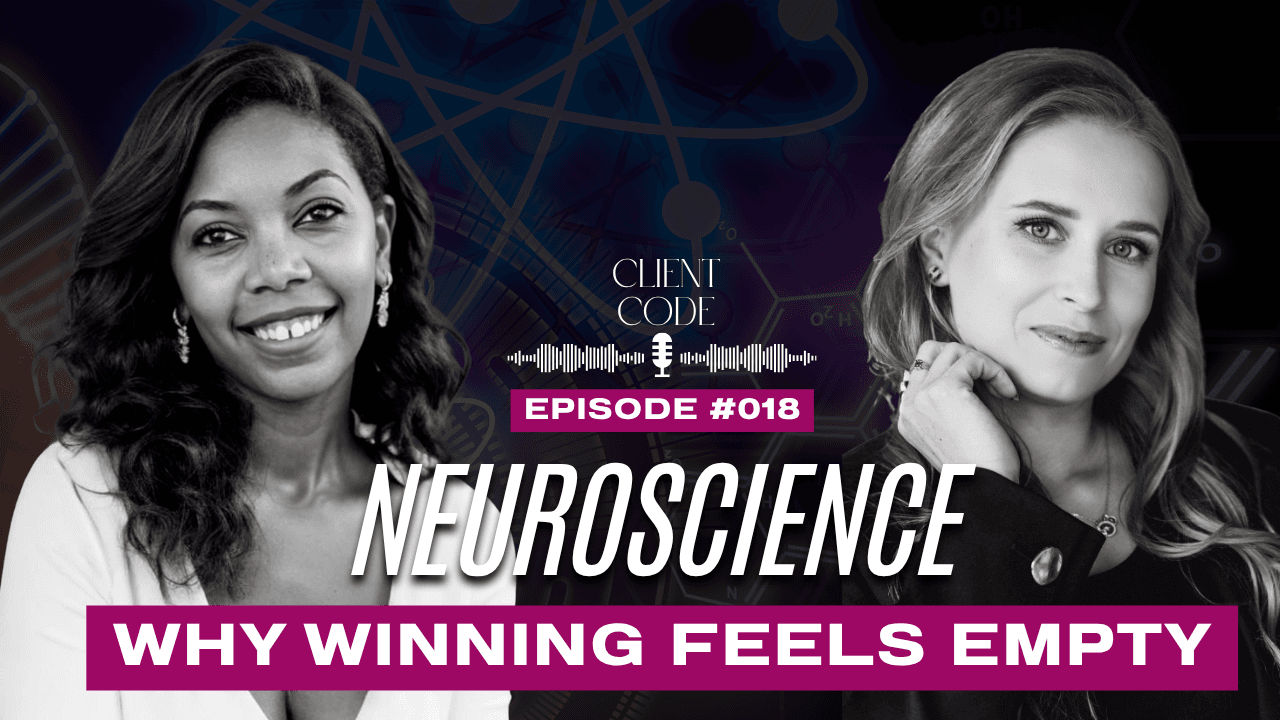
Let me tell you something. I was raised by a narcissist. So when Emma Lyons started talking about the shame voice, that 24/7, no-holidays, always-on internal bully that keeps you small, I didn't just understand it. I felt it in my body. And I know a lot of you will too.
Emma studied human rights law but never started that career. Depression, self-sabotage, and a relentless internal voice kept her stuck for years. She tried everything, yoga, therapy, healing modalities, before nervous system work and somatic practices finally cracked the code. Now she helps women who have "done all the things" but still feel invisible, burnt out, or frozen. And the way she frames the problem changed how I think about every business block I've ever had.
Here's what got me: it's not imposter syndrome. It's not self-doubt. It's not insecurity. Those are all symptoms. The actual disease? Shame.
The Inner Narcissist Running Your Business
Emma uses a term that stopped me cold: the inner narcissist. Not the grandiose, Donald-Trump-style narcissist. The covert one. The voice inside that beats you to the punch by shaming you before anyone else can. If I just tear myself down first, it won't hurt when someone else does it. Sound familiar?
"Shame says stay small, stay small, shrink, be tiny, be as tiny as you can so that no one will see you and you won't be attacked. That's the message from shame."
And here's where it gets really uncomfortable for anyone in business: this voice is the reason you procrastinate on the sales call, freeze before the pitch, water down your message, or self-sabotage right when things start working. Two steps forward, two steps back. Emma says you can trace every single one of those patterns back to shame.
She also challenged something I didn't expect, the idea that shame is useful. Even Brene Brown says you need a little shame or you're a psychopath. Emma disagrees. Hard. She says the people acting out the most in the world, narcissists, toxic leaders, destructive personalities, are acting out of repressed shame they've never dealt with. Shame doesn't make you behave better. It makes you shrink.
"That voice inside your head, that narcissist, we've been gaslighted into thinking it's trying to protect us. It's not trying to protect you. It's trying to protect itself. It's trying to keep you in a tiny box. It's trying to control you."
I'm not going to lie to you, that one hit me right in the chest. Because how many times have we told ourselves that fear was keeping us safe? That playing small was wisdom? Emma is saying no. That voice is a parasite, and it feeds off your energy.
The BREAK Method: How to Fight Back
Okay so this next part? It's the part you screenshot and save. Emma gave us a five-step acronym, BREAK, for those moments when shame hijacks your body and brain. Because shame doesn't just whisper. It physically makes you shrink. Your shoulders drop, you look down, your lip curls inward. I've felt it. You've felt it.
B, Break the trance. Recognise that the shame spiral is a pattern, not reality. Name it. Don't negotiate with it. Emma's exact words? "Not today, bitch. Not today, Satan. It ain't happening." I nearly fell off my chair.
R, Refuse to engage. Just like you'd grey-rock an actual narcissist. Don't defend. Don't engage. Don't explain. Don't personalise. The inner narcissist has no power without your energy. It's a parasite.
E, Expose the lie. Call out the shame-based programming. Whatever it's telling you, you're not good enough, you're a fraud, who are you to do this, recognise it's about control, not care. Speak the truth and it starts to disarm.
A, Anchor the truth. Come back to your body. Feel your breath. Plant your feet. Say your name. Remind your nervous system that you're here, you're safe, you're sovereign.
K, Kick it out. Physically shake it off. Emma pointed out that animals do this instinctively, after a fight, they shake their whole body and move on. My Boston Terrier Charlie does it every time the birds annoy him. We can do the same thing. Stomp, shake, move. Say out loud: this is not mine.
"When you don't have the receptor, the person cannot shame you. You can take back your power by eliminating this inner narcissist. People can come and call you whatever. And you'll just laugh at them."
That's the endgame. Not being numb. Being unshamable.
Quick Takeaways
- Imposter syndrome isn't the root problem. Procrastination, self-sabotage, freezing up, and feeling like a fraud are all symptoms of shame. Address the shame and the symptoms lose their grip.
- Shame physically changes your body. It makes you shrink, freeze, and go silent. Recognising the physical response is the first step to breaking the cycle.
- The inner voice is not your protector. It's a control mechanism that feeds off your energy. Treat it like the parasite it is.
- Use the BREAK method in real time. Break the trance, Refuse to engage, Expose the lie, Anchor the truth, Kick it out. Practise it until it becomes muscle memory.
- Women carry a heavier dose. Collective scapegoating, cultural programming, and the language itself reinforce shame in women. Knowing this isn't weakness, it's intelligence.
Emma left us with something powerful: when you exorcise that inner narcissist, you become unshamable. Not reckless. Not careless. Free. The kind of free where someone tries to project their shame onto you and you just return it to sender. If you've been doing all the work and nothing's moving, maybe the work isn't the problem. Maybe the shame voice is still running the show. And what you don't change, you choose. If you're building a business while navigating these inner shifts, start with a free visibility audit to see where you stand.
"When you don't have the receptor, the person cannot shame you. You can take back your power by eliminating this inner narcissist."