You have SOPs for your business. You have a marketing plan, a content calendar, a whole system for onboarding clients. But your relationships? You're winging it. You're throwing them to chance and hoping for the best.
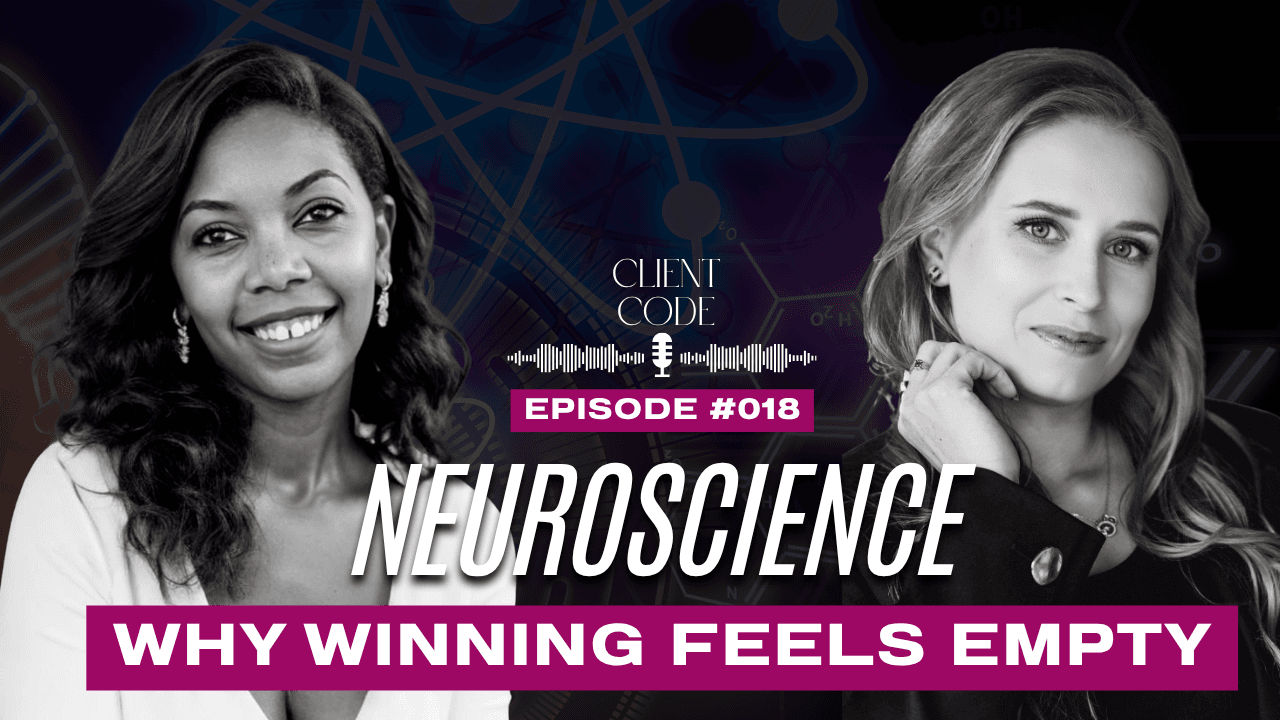
When I met Dr. Robin Buckley, it was like a twin meeting a twin. Same energy, different shades. And the thing she said that stopped me in my tracks was this: nobody listening to her podcast would run their business without a strategy, so why are we running our most important relationships that way?
Here's the part that really got me.
The One Strategy That Changes Everything
Robin works at the intersection of business, neuroscience, and psychology, and when I asked her for the single most important relationship strategy, she didn't hesitate. Check-ins. Not the "hey, how are you" kind you throw at someone while scrolling your phone. Real, intentional, five-minute check-ins where you actually show up.
"Five minutes of concentrated time where you're not distracted, where you're actually checking in to say, tell me what was the highlight of your day? Tell me one thing I can help you with right now. Tell me something you were really proud about today. That is the game changer for any relationship, including romantic relationships."
And here's the thing, this works everywhere. In your marriage, yes, but also in team meetings where you pile on workload without ever asking someone how their day is going. In business partnerships where you let months pass without a real conversation. Put it on the calendar. Because everything important in our lives is on our calendars. If it's not happening naturally, try something different.
Robin's secret sauce comes down to two words: intention and prevention. You're doing it deliberately, and you're doing it before problems get big. That is what makes relationships, personal and professional, actually work.
Your Brain Is Sabotaging Your Connections
Now here's where it gets real. You know that voice in your head when someone doesn't text back? The one that says "they hate me" or "they don't want to talk to me" or "too much time has passed"? That's your amygdala, the least evolved part of your brain, running a monologue that has zero facts behind it.
I told Robin about my worst habit: someone texts me, I see it, I mean to reply, and then days pass and I feel so awkward that I just... don't. She laughed because she literally just talked to her dad about the same thing.
"Talk back to your amygdala. When it says 'what if they hate me?', respond with 'what if they're just busy?' Give it the opposite possibility, because we don't know which is true. The opposite could equally be true."
Robin shared a story about emailing someone and getting both the person's name and the referral's name wrong. Instead of crawling into a hole, she leaned into vulnerability, sent a follow-up owning the mistake, and the woman thought it was hilarious. They ended up connecting. Because the people worth connecting with get it. They've had those days too.
The real kicker? We would never let someone talk to our best friend the way our amygdala talks to us. So why do we allow it?
"The only way you're going to find out is through action. If it's the worst case scenario, at least you'll know. Humans don't function well with uncertainty. We function very well with facts."
Robin shared a brilliant strategy for the paralysis part: just write the text. Don't commit to sending it. Just write it out. One client she worked with would type the message, slide his phone across the counter to his wife, and leave the room. Over time, he started hitting send. The momentum built because they took one small step at a time.
Quick Takeaways
- Schedule your check-ins. Put five-minute intentional check-ins on your calendar, with your partner, your team, your clients. If it matters, it gets scheduled.
- Talk back to your amygdala. When your brain spirals with worst-case scenarios, give it the opposite possibility. Neither version is proven, so why default to the worst one?
- Lead with vulnerability. The people worth building relationships with won't hold your imperfections against you. Make the call. Send the text.
- Just write it, don't send it yet. If you're paralysed, take one small step. Write the message with zero obligation to send. Momentum builds from there.
- Approach relationships like a business. Strategy doesn't kill spontaneity, it enhances it. Intention and prevention are the foundation of every relationship that lasts. That same principle of intentional change applies to how I approach business growth.
When I asked Robin my closing question, what you don't change, you choose, she got honest. She said she woke up filled with fear and what-ifs. So she chose productivity and peace. Step by step. She almost cancelled everything that day, but she showed up. And that's the whole point, isn't it? You don't have to feel ready. You just take the next small step.
"The only way you're going to find out is through action. Humans don't function well with uncertainty. We function very well with facts."